Unfortunately, there can be longer term consequences from treating prostate cancer. I seem to have acquired urological problems resulting from the removal of the prostate gland & later radiation treatments when the cancer returned. I have a prostatectomy in 2016 and follow up radiation therapy in 2018 when prostate cancer was detected in my pelvic lymph node.
We had moved from Chiang Mai on 17 March 2024 to That Phanom, in NE Thailand where we are building a new house on 3.5 Rai of land. Healthwise, all had been generally good until Saturday, 20 April 2024 – when all of a sudden I could not ‘pee’. It was a weekend, and eventually it was an “emergency”, so off the the local district hospital we went.
Cystoscopy
They confirmed a full bladder but through imaging could not see why I could not void the bladder. Attempts to insert a catheter were met with resistance – nothing would go into the bladder. A a needle was then used to insert into the bladder to relieve the pressure and drain as much as possible. Then I was bundled into an ambulance to be taken to the next larger town where a urologist was waiting for surgery. It was 2 am in the morning & I was wheeled into the operating theater in Nakhon Phanom Hospital where a cystoscopy procedure was performed.
It turned out that from the cancer surgery a stricture had formed where the urethra was reattached to the bladder & cut off the out flow. The urologist had cut away some of the stricture tissue and opened things up & inserted a catheter. After a 2 week stint with the catheter, very awkward device, it was finally removed (to my great relief) & everything worked normally (thank goodness).
Kidney Stones
Historically I have had progressive urinary problems with Kidney stones over the 2020/22 period. This required the use of shockwave therapy, surgical intervention & needed to take Allopurinol tablet daily to keep uric acid levels low. As well I have had bladder problems associated with increasing incontinence & the need to wear absorbent pads. It was understood to an overactive bladder.
Urinary Retention
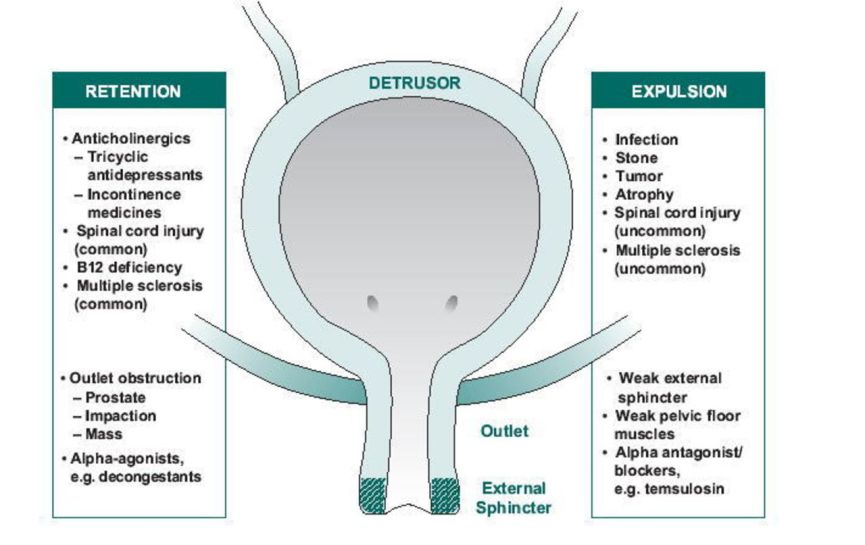
But then urinary retention (the inability to empty the bladder completely, or at all) started to feature & unfortunately, over 15 months during the 2024/2025 period, Ihad Acute Retention. It is a medical emergency when you cannot void suddenly, causing pressure, distress & can be painful. As a result, I have had to be catheterised 13 times when I have not been able to void my bladder. When a catheter was removed, I was only able to void normally from anywhere from6 hours to 2/4 weeks before needing to have another catheter installed. This has been a mystery and a problem that medical teams have not been able to solve.
The urologist at Nakhon Phanom Hospital after treating me for some time & aware of the numerous catheter requirements concluded that the urethra was open and that the bladder may not be working properly. As the local hospital does not have the equipment required, he provided a referral to the hospital in Khon Kaen to have a video urodynamic test undertaken to determine how the bladder is functioning. He thinks that radiation treatment may have damaged the bladder.
Another Cystoscopy
Instead of heading to Khon Kaen Hospital, I preferred to return to the urologist who did my prostate cancer surgery to seek his opinion and to hopefully get the urodynamic test at Siriraj Hospital in Bangkok. (that was a misguided decision)
Tuesday, 22 July 25, was dedicated to medical appointments (morning & evening) at Siriraj Hospital complex with the urologist that had performed by prostatectomy back in 2016. First appointment was at the Siriraj Private Hospital (Piyamaharajkarun) & later in the day an appointment at the Siriraj Public Hospital (outpatient after hours clinic) with the same urologist.
In the morning we discussed my concerns, history and medical referral from the Nakhon Phanom urologist. The doctor advised that he wanted to undertake a Cystoscopy procedure to visual inspect the urinary tract before any other bladder testing – as the symptoms suggest a “stricture”. Prior to the evening consultation some blood tests, ECG & Xray were ordered. All this took most of the morning & we were told to return after lunch to collect the results for our next appointment.
In the evening we took the results of the tests to the after hour appointment (18:30) to discuss next steps with the urologist. He advised that his team was available for the procedure on Friday 1 August & morning test results showed nothing of concern for the cystoscope procedure. I was advised that if the initial exploratory procedure identified a stricture, then a DVIU procedure would be performed to remove scar tissue. While I would initially be under sedation only, if cutting is required then either local or general anesthetic would be administered. While in the west this is normally a day procedure, at this Thai hospital it requires admission and a minimum 2 night stay (1 night before & 1 night after) for the surgical procedure. So after seeing the doctor we were directed to the planning and booking section to complete the preparations for admission on 31 July 25.
As planned we flew to Bangkok on Wednesday 30 July, hospital admission was on Thursday, 31 July. The cystoscopy and resulting dilation procedure occurred late in the day on the 1 August. I was under general anesthetic for the procedure, given the uncomfortable nature of the instrument and the techniques required. It turned out that while there was no stricture of the urethra requiring cutting, there was some narrowing of the urethra that was treated with dilation (widening of the urethra). Tests indicated I also had a significant UTI so was in hospital for 2 nights and discharged on Sunday 3rd, 2025, and allowed to return home. I was accompanied by yet another catheter to be worn for 2 weeks along with a course of antibiotics. Interestingly, an infection can also cause the symptoms I have been experiencing?
We again flew to Bangkok on 17 August, & stayed at a nice Chao Phraya riverside hotel close to the hospital. This was for a follow-up appointment on the 18 August, with the urologist (who did my original prostate cancer removal) to remove the catheter & voiding test the water works system. It was a very long day of waiting at Siriraj Urology Clinic ( 10 am – 3 pm) – as my 11 am appointment turned out to be 2 pm before seeing the doctor. It was a bit of a disappointing visit.
There were challenges with the voiding test & the doctor was very cold, dismissive of questions & just basically advised ” that I could pee, so leave and return in 3 months for follow up”. I had asked about urodynamic testing as requested by my urologist in Nakhon Phanom, but that was dismissed as not required at this time. I left feeling very let down & annoyed with the lack of discussion and explanation of the problem & way forward.
While my water systems did work for 5 days, it was an unfortunately short lived, as I needed to attend the That Phanom Hospital (near our house) again for yet another catheter insertion on 24 August 2025, when I was not able to void on my own. This time the catheter was only inplace for 7 days, as it seemed to be blocked on 30 August & not draining correctly. We went again to our local hospital to have the catheter removed. Very minimal wait times at the small emergency department (thank goodness) and the cost are very reasonable. 240 THB to insert the catheter and 100 THB to have it removed or $16 AUD.
Khon Kaen Urologist Visit
This lack of engagement with the urologist at Siriraj and the continued problem of urinary retention prompted us to contact Khon Kaen Public Hospital to seek another urology appointment to hopefully obtain urodynamic testing – with the referral I already had from the Nakhon Phanom urologist. We managed to get a hospital registration number and by Ace speaking with the urology department we managed to book an appointment on Saturday morning, 6 September 2025 for a consultation with a urologist. I will have my referral for the testing in hand to discuss with the Dr., long history, & hoping for a bladder test booking.
The doctor was pleasant and communicative, speaking good English. After discussions and review, I was offered a urodynmaic test later in the afternoon. The results were as anticipated, that the bladder pressure was extremely weak and the likely cause of my inability to void. A very weak bladder pressure (technically called detrusor underactivity or a “hypotonic/atonic bladder” is a direct explanation for why I could not pee and often needed catheterisation. The muscle is not strong enough to start or maintain a urine stream, leading to urinary retention.
Status – October 2025 to February 2026
Urinary Incontinence – Since the urodynamic study, I have not required further catheterisation. I am, however, totally incontinent (involuntary loss of bladder control or leakage of urine). It appears I may suffer from multiple forms of Incontinence, such as urge, overflow, and functional. There is no control, and I must wear adult pads all the time. It is frustrating to say the least, but at least I can function.
The urologist in Nakhon Phanom, whom I consult every few months, has indicated that it is likely I will have this issue for life. In terms of future retention and catheterisation, only time will tell. The urologist advised that it is just wait and see, get a catheter if I am unable to void and perhaps further cystoscopy dilations may be required as time goes on.
So for now, the quantity of life is good; the quality of life has a lot to be desired.
 Retirement Reimagined: Thailand; My uniquely travelled path